

UNDERSTANDING ENERGY SAVINGS IN EVERDAY TERMS
If you’ve been exploring our programs or planning home energy efficiency upgrades, you’ve likely come across the term gigajoule (GJ). But what exactly is a gigajoule and how much energy does it represent? While it isn’t a unit most of us use every day, understanding gigajoules can help you make sense of your home’s energy use and the savings you could achieve through your energy efficiency upgrades. Keep reading to learn more!
A COMMON WAY TO MEASURE ENERGY
A gigajoule is a unit of energy. It’s a useful way to measure and compare the energy use of different fuels.
In Manitoba, electricity is measured in kilowatt-hours (kWh), and natural gas is measured in cubic metres (m³). Other homes may use propane, fuel oil, or wood. Because each of these energy sources can be converted into gigajoules, it provides a common unit for measuring energy, regardless of the fuel source.
WHAT DOES ONE GIGAJOULE LOOK LIKE?
Looking at how energy is used around the home can help put gigajoules into perspective.
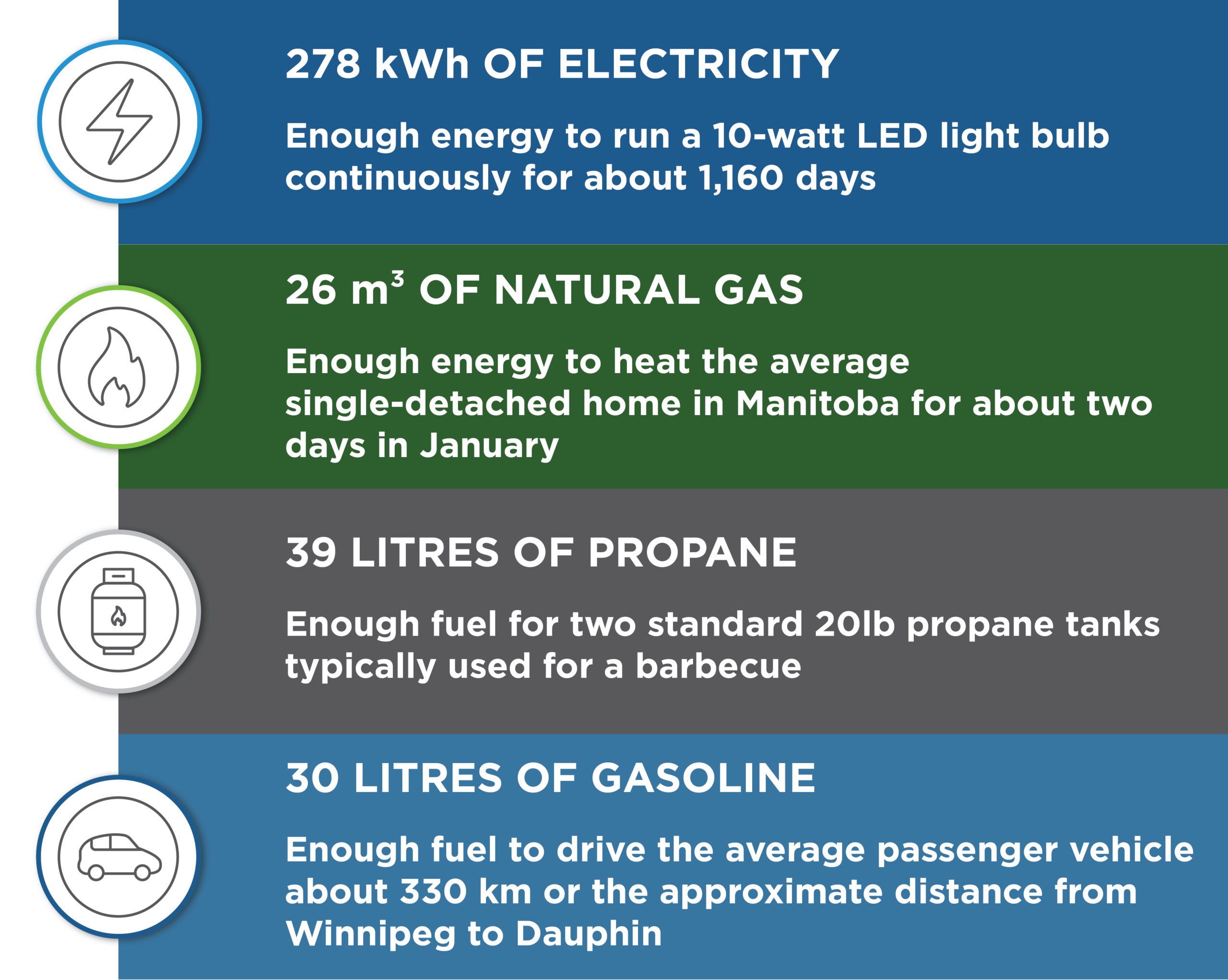
One gigajoule is equivalent to about:
HOW MUCH CAN YOU SAVE?
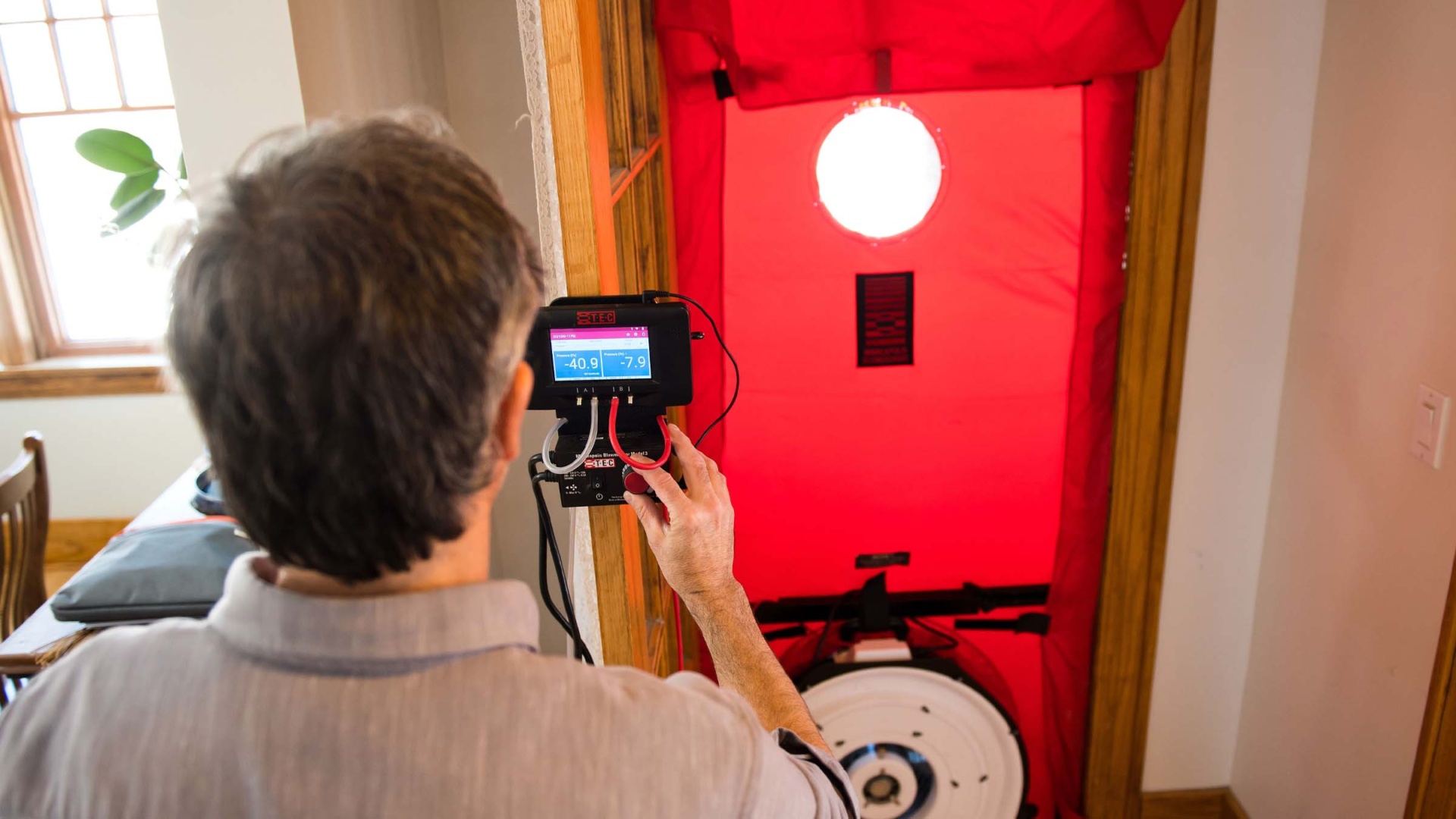
Ready to discover how much energy your home could save? A pre-retrofit EnerGuide evaluation helps you understand how your home uses energy and identifies opportunities to improve comfort and efficiency.

A registered energy advisor will assess your home and provide a report with recommendations tailored to your home. You’ll also receive an EnerGuide rating that lets you compare your home’s energy performance before and after upgrades.
Plus, you could be eligible for a free evaluation or a $400 rebate. Get started today to be on your way to more energy savings.